
Ignoring Nuclear Energy’s Environmental Impact
In Fall 2024, the Human Rights at Home Law Profs Blog is excited to feature a series of blog posts focusing on human rights and the environment written by students in the International Human Rights Clinic at UIC Law. This is the seventh post in that series. The first post can be accessed here. The second post is here. The third post is here. The fourth post is here. The fifth post is here. The sixth post is here.

Today, we “are losing” in the climate change race, but we can still win. Under the 2030 Agenda, the UN has produced Sustainable Development Goals, one of which is to “Take urgent action to combat climate change and its impacts.” One area of significant development is utilizing renewable energy sources, including nuclear energy.
To reduce carbon and other greenhouse gas (GHG) emissions released by fossil fuels, nuclear energy has been held as THE solution to focus on developing and using. However, nuclear energy is not a silver bullet. It has many conditions stirring heave debated. Advocates of nuclear energy often frame their arguments using the relative privation fallacy: the idea that because other forms of renewable energy are less reliable, nuclear energy is the “best” option.
Nuclear energy has significant benefits, including the ability to constantly provide reliable and stable energy independent of weather conditions. Historically, nuclear energy has prevented over 60 billion tons of GHG and carbon emissions between 1970 to 2015. However, significant impacts result from nuclear energy that are often ignored following the relative privation fallacy.
The relative privation fallacy, sometimes the “appeal to worse problems” or “comparative logic,” is a logical error that dismisses or minimizes an issue by comparing it to a more severe problem. This fallacy manifests when advocates compare nuclear energy to other renewable energy sources, such as wind or solar power. For example, Although thousands of people died in relation to the 2011 Fukushima nuclear accident, no one died of radiation poisoning, and statistically, the production of hydroelectric power kills more people than nuclear energy. Similarly, the production of solar energy causes fewer deaths than nuclear energy,
This argument and thinking shifts the focus away from the specific environmental impacts and reframes the alternatives as “less than” or concludes that the negative impacts are irrelevant on the global scale. However, blatantly ignoring or disregarding the environmental impacts undermines the idea of combating climate change.
While generating nuclear energy itself produces no GHG emissions, it is not environmentally neutral. The production of nuclear energy requires mining for uranium and a large water resource, both resulting in negative environmental impacts.
Nuclear energy production requires uranium, a naturally occurring radioactive element that is relatively common in the earth’s crust. However, obtaining uranium requires extracting it from the earth through mining. There are various ways to mine uranium, but they all require drilling into the ground or water resources. The energy used to mine uranium causes the highest amount of emissions when producing nuclear energy.
In addition to producing emissions, mining for uranium creates waste and can contaminate water sources miles away for hundreds of years. Besides the machine used to drill, waste is created by damaging and removing rocks from their natural location. Process water from mining mills contains traces of radium and other undesirable metals for biological systems. Water contamination occurs when waste liquors are not correctly disposed of and leaks into groundwater or enter water sources run-off streams.
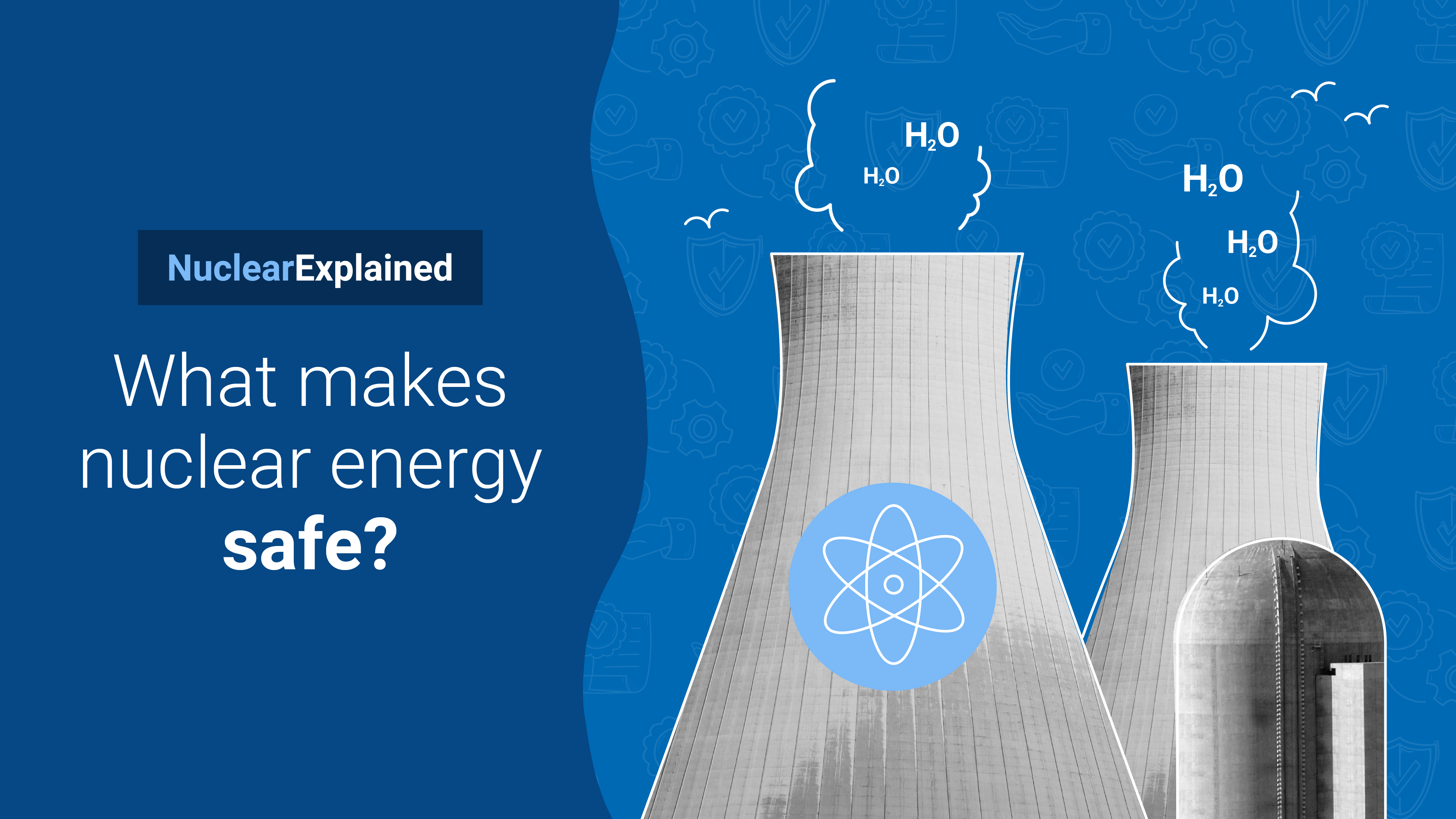
Nuclear energy production requires a lot of water and must be touching a water source. As a result, the average nuclear plant uses over 18 billion liters annually –– almost 50 million liters daily. This is 23 times more water consumption than wind and solar energy combined.
The water used in the nuclear power process is now contaminated with radionuclides, an unstable form of uranium that releases radiation as it breaks down and becomes more stable. Now, to reuse this water for any purpose, it must be filtered. Treating contaminated radioactive water releases emissions resulting in 20,000 grams of GHG released by one nuclear reactor every year. Furthermore, substantial water consumption impacts local communities and their water supply, degrades the water in contact with the reactor due to increased water temperature, and harms marine biodiversity.
The relative privation fallacy encourages a false dichotomy in the nuclear energy debate, undermining the nuanced understanding of nuclear power’s environmental costs and risks. It cannot be denied that nuclear energy is a valuable tool providing reliable, clean energy. However, it is not the only successful, readily available solution, and the long-term environmental damages associated with uranium mining and resulting waste must be acknowledged.
We must foster a more honest conversation about energy to move forward in our fight against climate change.
The technology to harness wind and solar energy has proven just as reliable and more sustainable than nuclear energy. But, nuclear, solar, and wind energy should be used in tandem at equal levels to address climate change. So, instead of leaning on the relative privation fallacy, we must confront nuclear energy’s full environmental costs and seriously consider cleaner, safer alternatives. The future of our planet depends on it.